
AI Marketing Framework: The Complete Guide for Businesses in 2026
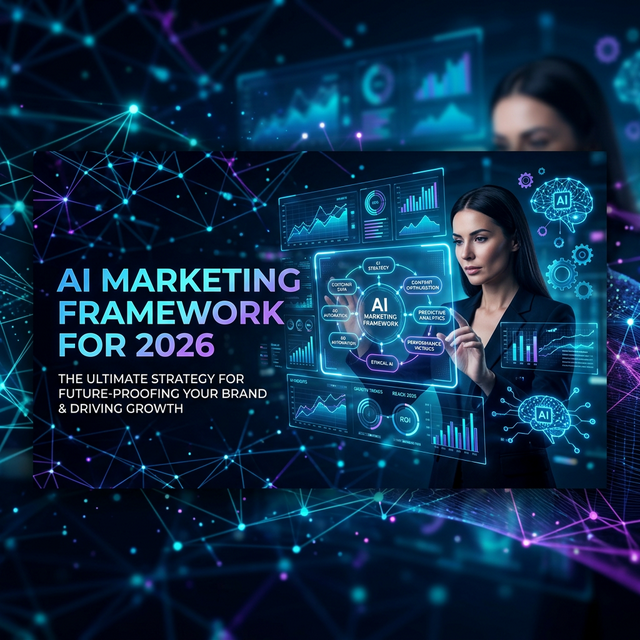
Artificial Intelligence(AI) is no longer a futuristic concept. It has already transformed how businesses approach marketing, customer engagement, and lead generation. Companies that adopt AI-driven marketing frameworks are gaining a competitive advantage by automating tasks, improving targeting accuracy, and delivering personalized experiences at scale.
Traditional marketing relied heavily on manual analysis, guesswork, and slow optimization cycles. Today, AI enables businesses to analyze large volumes of data instantly, predict customer behavior, and automate entire marketing workflows.
In this guide, we will explore what an AI Marketing Framework is, why businesses need it, and how organizations can implement it to generate leads, increase conversions, and scale marketing efforts efficiently.
What is an AI Marketing Framework?
An AI Marketing Framework is a structured system that uses artificial intelligence technologies to automate, optimize, and enhance marketing activities. It integrates AI tools across different stages of the marketing funnel to improve decision-making, campaign performance, and customer engagement.
The framework typically combines:
- Data analytics
- Machine learning algorithms
- Marketing automation
- Predictive customer insights
- AI-driven content generation
Instead of relying solely on manual marketing processes, businesses using an AI marketing framework allow intelligent systems to analyze data, identify opportunities, and continuously optimize campaigns.
The goal is simple: generate better marketing results with less manual effort and greater precision.
Why Businesses Need an AI Marketing Framework
Marketing has become more complex than ever. Customers interact with brands across multiple platforms including search engines, social media, websites, email, and messaging applications. Managing all these channels manually is inefficient and often leads to inconsistent results.
An AI marketing framework helps businesses overcome these challenges by enabling smarter digital marketing decisions.
1. Data-Driven Decision Making
AI tools analyze large datasets to uncover insights about customer behavior, preferences, and buying patterns. Businesses can then make strategic decisions based on data rather than assumptions.
2. Hyper-Personalized Customer Experiences
Consumers expect personalized interactions. AI systems can analyze customer data and deliver personalized product recommendations, email campaigns, and marketing messages.
3. Automated Campaign Optimization
AI continuously monitors campaign performance and automatically adjusts budgets, audience targeting, and messaging to maximize ROI.
4. Faster Marketing Execution
Tasks such as content creation, ad copywriting, data analysis, and campaign reporting can be automated, saving valuable time and resources.
5. Improved Lead Generation
AI-powered marketing funnels can capture leads, qualify prospects, and nurture them automatically until they are ready to convert.
Businesses implementing AI-driven marketing strategies often see:
- Higher conversion rates
- Lower customer acquisition costs
- Increased marketing efficiency
- Better customer insights
Core Components of an AI Marketing Framework
A successful AI marketing framework consists of several interconnected components that work together to create a powerful marketing ecosystem.
1. Data Collection and Customer Insights
Every AI marketing system starts with data. Businesses collect information from multiple sources, including:
- Website analytics
- Customer relationship management (CRM) systems
- Social media platforms
- Advertising platforms
- Email marketing tools
AI analyzes this data to identify patterns, segment audiences, and predict customer behavior. For example, machine learning algorithms can determine which customers are most likely to convert, allowing marketers to focus on high-value prospects.
2. AI-Powered Content Creation
Content remains the foundation of digital marketing. AI tools can assist marketers in generating content ideas, writing blog posts, creating ad copy, and even designing visuals.
Common AI-powered content tasks include:
- Blog content generation
- Social media captions
- Email marketing content
- Video scripts
- SEO optimization
By combining human creativity with AI automation, businesses can produce high-quality content at scale.
3. Intelligent Audience Targeting
One of the biggest advantages of AI marketing is advanced audience targeting. Traditional marketing often relies on basic demographics such as age, location, or gender. AI takes targeting to the next level by analyzing behavioral patterns such as browsing history, purchase behavior, and engagement signals.
This allows businesses to identify:
- High-intent prospects
- Potential repeat customers
- Lookalike audiences
- Customer lifetime value predictions
As a result, marketing campaigns become significantly more precise and effective.
4. Marketing Automation
Automation is a critical component of AI marketing frameworks. Once the system identifies the right audience and messaging strategy, automation tools manage repetitive tasks.
Examples of marketing automation include:
- Automated email sequences
- Lead nurturing workflows
- Chatbot conversations
- Social media scheduling
- CRM updates
Automation ensures that customers receive the right message at the right time without requiring constant manual intervention.
5. AI Chatbots and Conversational Marketing
AI chatbots are transforming how businesses interact with customers online. Instead of waiting for a human agent, customers can instantly receive answers to their questions through intelligent chat systems.
AI chatbots can:
- Respond to customer queries
- Recommend products or services
- Capture leads
- Schedule consultations
- Provide customer support
Conversational marketing powered by AI improves user experience while helping businesses collect valuable customer data.
6. Predictive Analytics
Predictive analytics uses machine learning models to forecast future customer behavior. Businesses can use predictive insights to determine:
- Which leads are most likely to convert
- Which customers may churn
- Which marketing channels generate the highest ROI
- What products customers are likely to purchase next
These insights allow marketers to take proactive actions that improve campaign performance.
The AI Marketing Funnel
A well-structured digital marketing framework follows a funnel approach that guides potential customers through different stages of the buying journey.
Stage 1: Awareness
At the awareness stage, businesses attract potential customers through SEO content, social media marketing, paid advertising, video marketing, and influencer collaborations. AI tools help identify trending topics, optimize keywords, and create high-performing marketing campaigns.
Stage 2: Interest
Once users discover your brand, the goal is to keep them engaged. AI tools can personalize website experiences by recommending relevant content or products based on user behavior. Lead magnets such as eBooks, webinars, or free consultations can also be used to capture contact information.
Stage 3: Consideration
At this stage, prospects are evaluating whether your solution is right for them. AI-driven marketing automation can send personalized emails, case studies, and product comparisons to nurture leads. This helps build trust and move prospects closer to making a purchase decision.
Stage 4: Conversion
Conversion occurs when a lead becomes a customer. AI-powered tools can optimize landing pages, analyze user behavior, and recommend improvements that increase conversion rates. For example, AI can identify which call-to-action buttons generate the highest engagement.
Stage 5: Retention and Loyalty
AI marketing does not stop after conversion. Retaining customers is equally important. AI systems can analyze customer satisfaction data and automatically trigger retention campaigns such as loyalty programs, special offers, or personalized recommendations. Happy customers often become repeat buyers and brand advocates.
Popular AI Marketing Tools
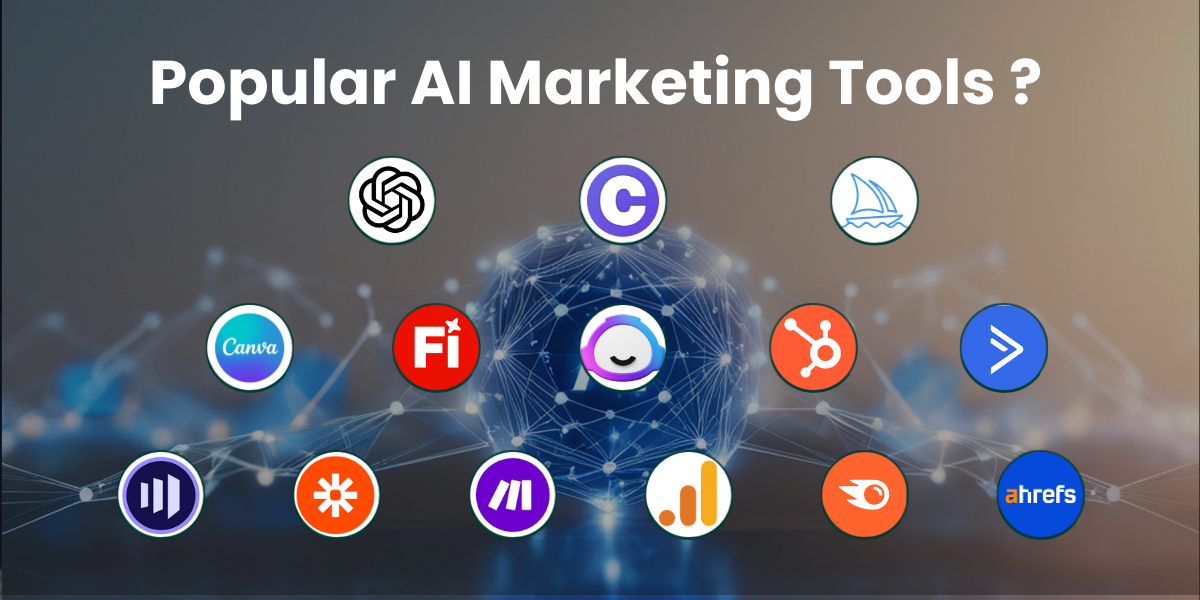
Many powerful tools are available to help businesses implement AI marketing frameworks. Some commonly used platforms include:
- ChatGPT
- Jasper AI
- Copy.ai
- Midjourney
- Canva AI
- Adobe Firefly
- HubSpot
- ActiveCampaign
- Marketo
- Zapier
- Make.com
- Google Analytics
- SEMrush
- Ahrefs
Each tool plays a role in creating a fully integrated AI-powered marketing ecosystem.
How Businesses Can Implement an AI Marketing Framework
Implementing an AI marketing framework does not require replacing your entire marketing system. Instead, businesses should adopt AI gradually by integrating it into existing processes.
- Step 1: Evaluate Current Marketing Systems
Businesses should first analyze their existing marketing workflows, tools, and performance metrics. - Step 2: Identify Automation Opportunities
Look for repetitive tasks that can be automated using AI tools. Content generation, reporting, and lead qualification are common starting points. - Step 3: Integrate AI Tools
Select AI tools that align with your marketing objectives and integrate them with your existing platforms. - Step 4: Train Marketing Teams
Employees should be trained to work alongside AI technologies. The goal is to enhance productivity rather than replace human creativity. - Step 5: Monitor and Optimize
AI marketing frameworks improve over time as they collect more data. Businesses should continuously monitor performance and refine strategies accordingly.
The Future of AI Marketing
AI will continue to reshape the marketing landscape in the coming years. Several emerging trends are expected to dominate the future of AI marketing.
- Hyper-Personalized Marketing: AI will enable businesses to deliver highly personalized experiences to individual users in real time.
- Voice and Conversational Marketing: Voice assistants and conversational interfaces will become major marketing channels.
- Predictive Customer Journeys: AI will anticipate customer needs before they even express them.
- Autonomous Marketing Systems: Fully automated marketing systems will manage campaigns with minimal human intervention.
Businesses that adopt AI early will be better positioned to compete in the rapidly evolving digital marketplace.
Artificial intelligence is transforming how businesses approach marketing. An AI Marketing Framework provides a structured way to integrate AI technologies into marketing strategies, allowing companies to automate workflows, analyze customer behavior, and optimize campaigns in real time.
Organizations that adopt AI-powered marketing frameworks can generate higher-quality leads, improve customer experiences, and scale their marketing efforts more efficiently.
As competition increases across industries, businesses must move beyond traditional marketing methods and embrace AI-driven innovation.
Companies that successfully integrate AI into their marketing strategies today will lead the digital economy tomorrow.
Digital IT Hub is a leading digital marketing and technology solutions company that helps businesses implement advanced marketing strategies, automation systems, and AI-driven growth frameworks.
If you want to build an AI-powered marketing system for your business, connect with the experts at Digital IT Hub to explore customized solutions that drive measurable results.